Water Softening Solutions
Orange County water is 15–25 gpg (very hard). Our softening systems prevent scale buildup, protect appliances, and soften skin and hair.
$50 Off Any Service $500+
Save $50 on whole-home filtration, water softener, and reverse osmosis installations totaling $500 or more. Mention this offer when you call.
Professional Water Softening Solutions in Orange County
Orange County has some of the hardest water in California, measuring 15-25 grains per gallon (gpg). Hard water leaves white scale deposits on fixtures, spots on dishes and shower doors, and causes buildup inside pipes and water heaters that reduces efficiency and shortens equipment lifespan. A water softener eliminates these problems at the source.
Water softeners work through ion exchange — replacing the calcium and magnesium ions that cause hardness with sodium or potassium ions. The result is soft water that lathers better, rinses cleaner, and doesn't leave mineral deposits. Most homeowners notice the difference immediately in their skin, hair, and the cleanliness of their fixtures.
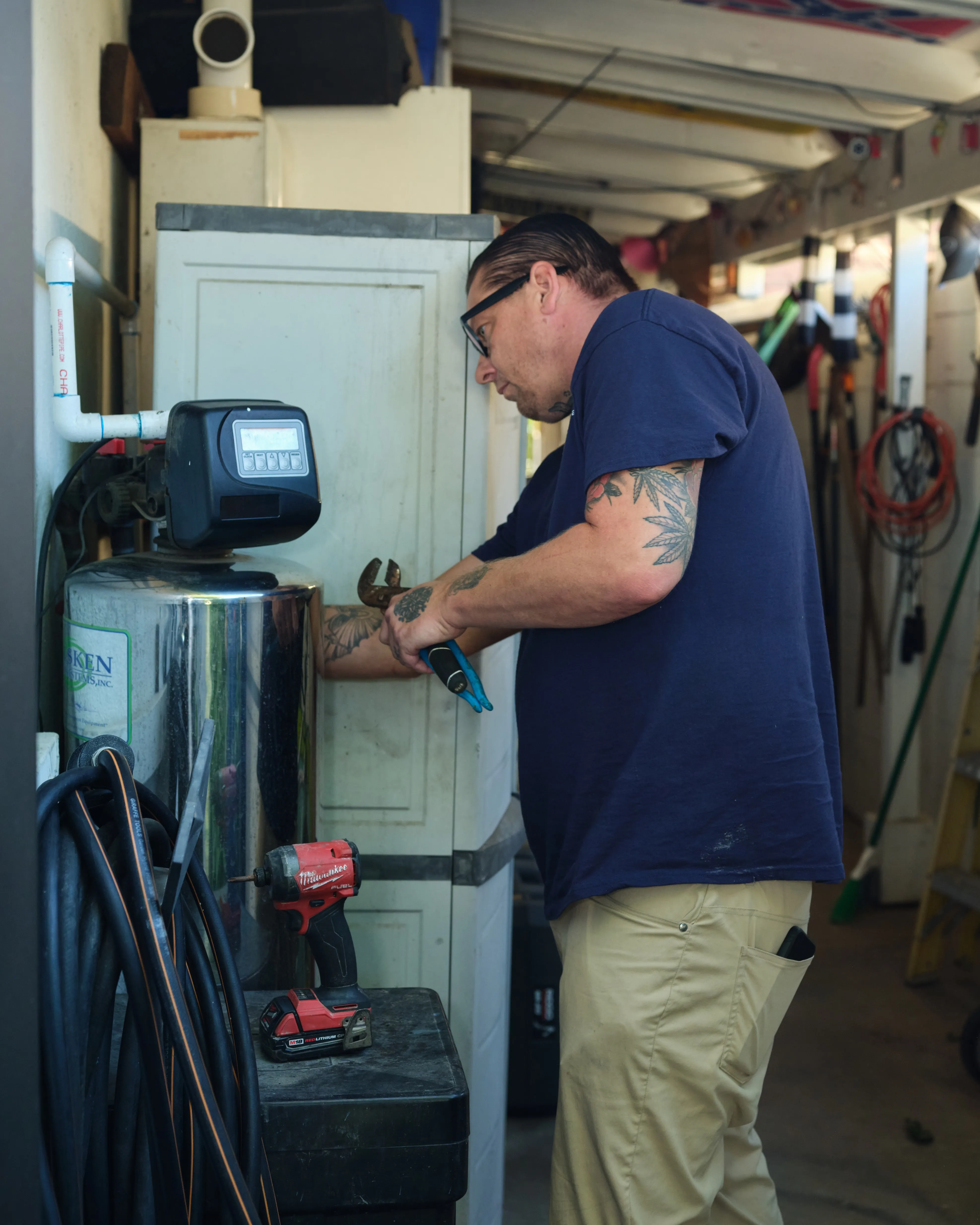
KCB Plumbing installs properly sized water softeners that match your home's water usage and hardness level. We also offer salt-free water conditioning systems for homeowners who prefer an alternative to traditional salt-based softeners. Our team helps you understand the pros and cons of each option so you can make an informed decision.
Need Water Softening Solutions?
Call for a free over-the-phone estimate. Upfront pricing, no surprises.
(714) 894-6520Our Process
How It Works
Water Hardness Test
We test your water to determine the exact hardness level and identify any other water quality issues.
System Sizing
Based on your hardness level, household size, and water usage, we calculate the right softener capacity.
Installation
The softener is installed on your main water line after the hose bibs (outdoor faucets don't need soft water). We connect the drain line and set the regeneration schedule.
Programming
We program the softener for your specific water conditions and usage patterns for optimal salt efficiency.
Operation Walkthrough
We show you how to add salt, adjust settings, and recognize when the system needs attention.
Why Choose KCB for Water Softening Solutions
- Upfront flat-rate pricing — you approve before we start
- Licensed (#604044), insured, and bonded
- 99.9% on-time response rate
- 4.9 stars across 50+ Google reviews
- Serving Orange County since 1998
What Affects Pricing
We provide transparent, upfront pricing before any work begins. Here are the factors that affect the cost of water softening solutions:
- Softener type (salt-based vs. salt-free conditioner)
- System capacity (based on household size and hardness)
- Installation complexity and plumbing modifications
- Brand and features (Wi-Fi monitoring, high-efficiency regeneration)
- Ongoing salt costs
Common Questions
Water Softening Solutions FAQ
How hard is Orange County water?
Orange County water typically ranges from 15-25 grains per gallon (gpg), which is classified as 'very hard' by water quality standards. This level of hardness causes significant scale buildup in pipes, water heaters, and on fixtures without treatment.
What's the difference between a water softener and a water conditioner?
A traditional water softener uses salt to remove calcium and magnesium through ion exchange — it physically changes the water chemistry. A salt-free conditioner doesn't remove minerals; instead, it changes their form so they don't stick to surfaces. Softeners are more effective but require salt, while conditioners are maintenance-free but less effective at preventing all scale.
Will a water softener make my water taste salty?
No. While the softening process uses sodium, the amount added is very small — typically 20-30 mg per 8-ounce glass, far below what you could taste. If sodium intake is a concern, potassium chloride can be used instead of sodium chloride.
How much salt does a water softener use?
A typical residential water softener uses 40-80 pounds of salt per month, depending on water hardness, household size, and unit efficiency. High-efficiency softeners use significantly less. Salt costs about $5-8 per 40-pound bag.
Should I soften water to my outdoor faucets?
No. We install softeners downstream of outdoor hose bibs so you're not wasting softened water (and salt) on irrigation and car washing. Outdoor use doesn't benefit from soft water, and some plants actually prefer harder water.
Water Softening Solutions Throughout Orange County
We provide water softening solutions services across all of Orange County. Click your city to learn about local plumbing needs:
Other Water Purification Services
Water Filtration Installation
Cleaner, healthier water from systems tailored to Orange County homes. Whole-home and under-sink solutions that remove impurities and protect your plumbing.
Learn more →Reverse Osmosis Systems
Premium drinking water right from your tap. Multi-stage filtration for the cleanest water possible.
Learn more →System Maintenance & Filter Replacement
Keep your water systems running perfectly. Regular maintenance and timely filter changes for optimal performance.
Learn more →Related Services
Explore other plumbing services that complement water softening solutions.
Residential Plumbing
Complete residential plumbing services from new construction to everyday repairs. We handle everything so your home runs smoothly.
View services →Drain Cleaning
Professional drain cleaning that goes beyond the surface. We clear blockages and keep your drains flowing for the long term.
View services →Leak Detection & Repair
Hidden leaks waste water and cause damage. Our advanced detection finds leaks fast, and our repairs are built to last.
View services →Need Water Softening Solutions?
Call us for a free over-the-phone estimate. We'll get your plumbing taken care of right.